
Introduction
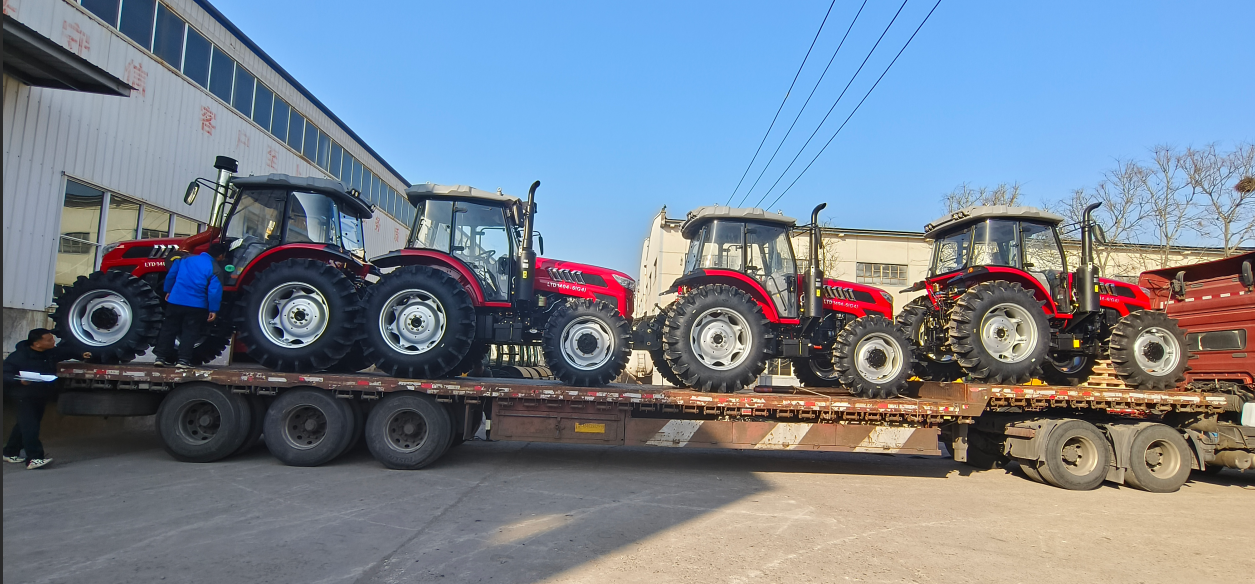
Standardized and safe container loading is critical for damage-free international export of agricultural tractors. As common heavy farm machinery, tractors feature irregular structures, protruding attachments and rolling wheels, which are prone to sliding, collision, paint scratching and component damage during sea and land transit. Strict compliance with professional loading specifications effectively avoids equipment failure, container deformation, customs clearance delays and extra logistics costs, ensuring intact delivery of tractors to global destinations. This complete guide covers pre-loading preparation, standard placement, reinforcement measures and post-loading inspection, serving agricultural machinery exporters, freight forwarders and on-site loading teams.
1. Pre-Loading Preparation & Inspection
Adequate pre-loading preparation is the foundation to eliminate hidden dangers and ensure smooth tractor shipment.
Container Inspection: Adopt certified 20GP/40GP/40HQ shipping containers with intact structures, dry, clean and odorless interiors. Check for no sharp protrusions, rust, water leakage, cracks or residual debris. Verify the container floor bearing capacity to withstand the tractor’s weight without deformation or breakage, and ensure all doors, locks and sealing parts work normally.
Tractor Pre-Shipment Processing: Thoroughly clean the tractor’s body, tires, chassis and radiator grille to remove mud, crop residues and dust, fully meeting international customs and phytosanitary inspection standards. Standardize residual liquid treatment: keep fuel volume within 1/4 of the tank as required by maritime safety regulations, and completely drain cooling water, excess hydraulic oil and engine oil to prevent leakage, container pollution and fire hazards. Disassemble and independently pack vulnerable and protruding accessories including rearview mirrors, antennas, exhaust pipes and small farm tools. Retract and fix hydraulic arms, lifting brackets and other movable parts firmly. Wrap painted surfaces, instrument panels, lamps and hydraulic connectors with stretch film and foam padding for anti-scratch and anti-collision protection. Disconnect the battery and insulate the interface with adhesive tape to avoid accidental sparking during transit.
Tool & Site Preparation: Prepare professional loading tools including heavy-duty forklifts, cranes, non-slip dunnage, high-tensile tension belts, steel chains, wheel chocks, wooden braces and inflatable airbags. Conduct loading operations on firm, flat and stable ground to prevent tractor tipping or sliding during entry and positioning.
2. Standard Loading & Placement Rules
Scientific placement and balanced weight distribution guarantee the overall stability of the tractor during long-distance transportation.
Balanced Weight Layout: Place the tractor at the center of the container to achieve uniform weight bearing. Avoid eccentric or offset placement, which easily causes container deformation, unbalanced gravity center and rollover risks during truck transportation and sea turbulence. Keep the tractor’s center of gravity low and stable to enhance transit safety.
Standard Loading Operation: Use high-strength, non-slip loading ramps with sufficient bearing capacity for tractor entry. Prohibit speeding, sharp turning and sudden braking during driving and positioning to avoid body shaking and impact. After placing the tractor in place, turn off the engine, engage the hand brake, shift to neutral gear, and clamp all tires with professional wheel chocks to prevent rolling displacement.
Void Filling & Anti-Shock Protection: Fill the gaps between the tractor and container walls with wooden dunnage, inflatable airbags or foam blocks to eliminate movable space. This effectively buffers vibration and impact caused by bumpy roads and sea waves, preventing long-term friction and collision damage to the tractor body. All filling materials must be fixed tightly without looseness or shaking.
3. Professional Fixing & Reinforcement Measures
Reliable multi-directional fixing is the core step to prevent tractor sliding, shifting and tipping in the container.
Multi-Point Lashing & Binding: Adopt longitudinal and transverse cross fixing methods. Bind the tractor’s chassis, frame and tire bearing parts to the container floor locking points with high-load tension belts and steel chains. Avoid binding fragile parts such as hydraulic pipelines, instrument panels and thin steel plates to prevent extrusion deformation and component damage. Use edge protectors to prevent belts and chains from cutting the tractor paint and metal surfaces.
Anti-Slip & Bracing Reinforcement: Lay non-slip rubber pads or wooden plates under the tractor tires to increase friction and prevent sliding. Install firm wooden or metal braces between the tractor body and container side walls to form a stable support structure. For long-term sea freight, add auxiliary shockproof accessories to resist fixing looseness caused by continuous vibration.
Accessory Integrated Fixing: Sort, number and seal all disassembled accessories, bolts and small parts, and place them in the spare space of the container for independent fixing. Avoid loose accessories stacking around the tractor to prevent extrusion and collision damage to the main body.
4. Post-Loading Inspection & Shipment Preparation
Comprehensive post-loading inspection eliminates potential risks and ensures seamless container sealing and shipment.
Full Fixation Inspection: Thoroughly check all tension belts, steel chains, wheel chocks and bracing structures to confirm firm fixation without looseness, falling off or deformation. Verify no movable gaps exist between the tractor and buffer materials, and the overall state is stable and shock-resistant.
Safety & Cleanliness Check: Clean up all loading tools, sundries and residues in the container to keep the interior tidy. Remove all flammable, explosive and dangerous goods. Recheck the whole machine for liquid leakage and hidden safety hazards to fully comply with international transportation standards. Place desiccants in the container to prevent metal parts from rusting during long-distance sea transportation.
Sealing & Traceability Marking: After confirming all loading standards are met, tightly close and lock the container doors. Paste standard shipping marks, warning labels and anti-counterfeiting seal labels as required. Record complete loading photos and videos for cargo traceability, customs verification and after-sales confirmation.
5. Core Loading Precautions
- Never overload the container or place the tractor eccentrically to avoid container damage and transportation safety accidents.
- Only use intact, qualified high-bearing fixing tools and dunnage materials to ensure stability during long-distance transit.
- Standardize residual liquid and battery processing to avoid fire hazards, liquid leakage pollution and customs inspection failures.
- Fully protect painted surfaces, hydraulic parts and precision electronic components to avoid scratches, wear and impact damage.
- Comply with destination country phytosanitary regulations and complete fumigation certification for all wooden packaging materials.
- Prohibit mixed loading with corrosive, polluting and sharp goods to prevent secondary damage to the tractor.
- Ensure all disassembled parts are completely recorded and packed to avoid missing accessories after cargo arrival.