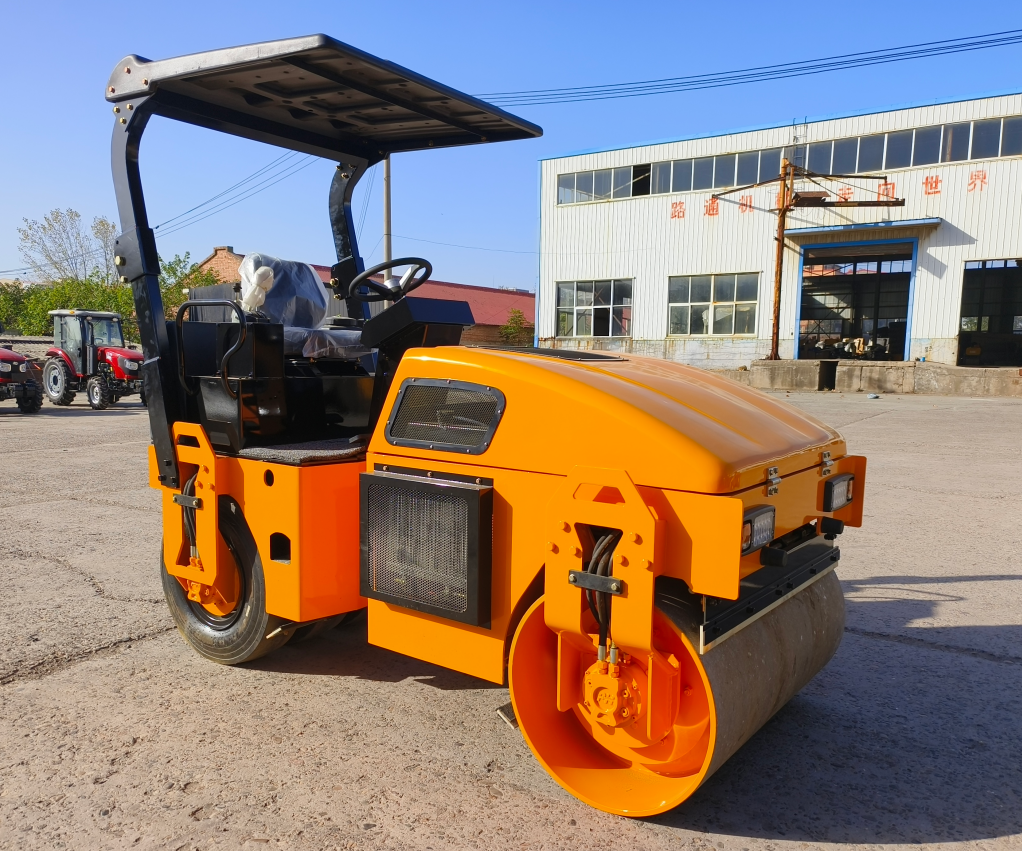
A road roller is the core heavy-duty equipment in road construction, highway maintenance, and infrastructure projects. Its stable performance directly determines project progress, construction quality, and operational costs. Regular and scientific maintenance is not just a routine task — it is the most cost-effective way to maximize your road roller’s service life, avoid sudden breakdowns, and ensure consistent construction efficiency. Whether you own a single drum roller, double drum roller, or static road roller, standardized daily and periodic maintenance is essential for long-term reliable operation.
Why Regular Road Roller Maintenance Matters
Many construction teams ignore daily maintenance until equipment failures occur, leading to costly downtime, expensive part replacements, and delayed project deadlines. Proactive maintenance brings tangible benefits for your construction business:
- Minimize Unplanned Downtime: Daily inspections and regular upkeep eliminate sudden mechanical faults such as hydraulic system leaks, engine stalling, and vibration failure, ensuring continuous construction progress.
- Extend Equipment Service Life: Timely lubrication, cleaning, and part inspection reduce wear and tear on core components, effectively extending the roller’s overall lifespan and improving your equipment return on investment.
- Stable Construction Quality: A well-maintained road roller maintains uniform vibration frequency and stable compaction pressure, ensuring flat, solid, and standard-compliant road compaction results.
- Cut Operational & Repair Costs: Preventive maintenance avoids severe component damage caused by minor faults, greatly reducing high-cost repairs and part replacement expenses in the long run.
- Ensure Construction Safety: Regular brake system, tire, and hydraulic system checks eliminate potential safety hazards, protecting operators and construction site safety.
Essential Daily Maintenance Checklist for Road Rollers
Daily maintenance is the foundation of long-term equipment stability, requiring simple and systematic checks before, during, and after each operation.
1. Pre-Operation Inspection
Before starting the road roller every day, complete a full visual and functional inspection to rule out basic faults:
- Check the engine oil level, coolant level, and hydraulic oil level to ensure all liquids are within the standard range; replenish or replace fluids timely if insufficient or deteriorated.
- Inspect the roller drum surface for cracks, deformation, adhesion of concrete or gravel, and clean up foreign substances to avoid affecting compaction flatness.
- Test the brake system, steering system, and vibration function to ensure flexible and sensitive operation without lag or failure.
- Check all connecting bolts, fasteners, and pipeline joints for looseness, leakage, or damage.
- Verify the normal operation of indicator lights, alarms, and instrument panels to ensure accurate real-time data monitoring.
2. In-Operation Monitoring
Pay close attention to the equipment status during construction to stop abnormal operation in time:
- Monitor engine temperature, oil pressure, and hydraulic system pressure in real time to avoid overheating or overload operation.
- Listen for abnormal noise, vibration, or friction from the engine, transmission, and walking system.
- Avoid long-term full-load operation and harsh working conditions such as over-compaction and sudden start/stop to reduce equipment wear.
3. Post-Operation Daily Care
Timely post-work maintenance can effectively delay component aging and keep the equipment in optimal standby condition:
- Clean the entire equipment surface, especially the roller drum, heat dissipation system, and engine surface, to remove dust, mud, and construction residues.
- Check and clean the air filter to ensure smooth engine air intake and avoid dust abrasion on internal parts.
- Park the road roller on flat and solid ground, retract all hydraulic components, and turn off the power stably.
- Check tire pressure and tire wear for tire rollers, and repair or replace damaged tires in time.
Periodic Scheduled Maintenance (Weekly & Monthly)
On the basis of daily maintenance, implement standardized periodic maintenance to solve potential hidden dangers of core components:
Weekly Maintenance
- Perform comprehensive lubrication on all lubrication points such as bearings, hinges, and transmission parts with high-quality grease to reduce mechanical friction.
- Check the tension and wear of belts and chains, and adjust or replace worn parts.
- Inspect hydraulic hoses and seals for aging, cracking, or oil leakage to ensure the hydraulic system operates stably.
Monthly Maintenance
- Replace engine oil, oil filter, and fuel filter to ensure clean engine operation.
- Dirt and sediment in the hydraulic oil tank and fuel tank to purify the oil circuit system.
- Comprehensively calibrate the vibration system and compaction system to guarantee construction accuracy.
- Check the battery power, wiring harness aging, and electrical system stability.