
Introduction
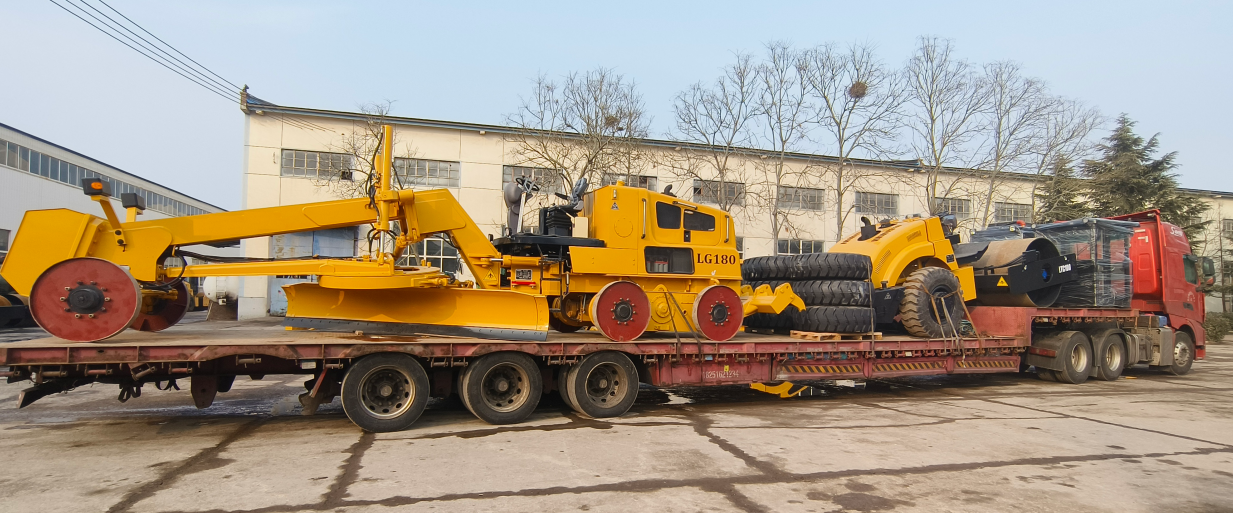
A motor grader is a core heavy-duty construction machine widely used for road leveling, land grading, slope trimming, and pavement maintenance. A standard and safe test run is the key to verifying the overall performance, mechanical stability, and operational safety of the newly assembled or maintained motor grader. Proper test run operation can effectively avoid mechanical failures, extend equipment service life, and eliminate potential safety hazards during formal construction. This guide systematically sorts out all standard precautions for motor grader test runs, covering pre-test, during-test, and post-test specifications, providing reliable operation guidelines for construction teams, equipment operators, and machinery buyers.
1. Pre-Test Run Precautions
Full pre-inspection is the foundation of a safe and effective motor grader test run. All inspection items must be completed strictly in accordance with industrial standards before starting the equipment to prevent abnormal operation damage.
1.1 Appearance and Structural Inspection
Check the overall body structure for deformation, cracks, loose welding points, and damaged parts. Verify the tightness of all connecting bolts, especially the fixing bolts of the grader blade, frame, drive axle, and cab. Inspect the tire pressure and tire surface condition to ensure no air leakage, serious wear, or tire damage. For tracked motor graders, check the track tension, wear degree, and roller operation status. Confirm that all protective covers and safety guards are installed completely and firmly.
1.2 Fluid and Lubrication Inspection
Check the liquid levels of engine oil, hydraulic oil, cooling water, brake fluid, and fuel strictly. Ensure all fluids are within the standard scale range, no leakage, no deterioration, and no impurities. Inspect all lubrication points and fill qualified lubricating grease as required to avoid dry friction and mechanical wear during operation. Check all oil pipes, water pipes, and hydraulic pipelines for aging, cracking, loosening joints, and liquid leakage.
1.3 Electrical System Inspection
Check the battery power, wiring harness connection, and fuse status to ensure no loose wires, short circuits, or aging damage. Test all indicator lights, headlights, warning lights, horn, and reversing alarm to confirm normal display and response. Verify the normal operation of the instrument panel to ensure accurate display of speed, oil pressure, water temperature, and fault codes.
1.4 Site and Safety Preparation
The test site must be flat, solid, and spacious, without obstacles, personnel, and sundries within the operating range. Set up obvious safety warning signs to isolate the test area. Operators must wear standard protective work clothes, safety shoes, and protective gloves, and be familiar with the equipment operation manual and emergency stop procedures. Ensure no irrelevant personnel enter the test run area to avoid safety accidents.
2. During Test Run Operation Precautions
Strictly follow the step-by-step test run process after pre-inspection confirmation, and monitor the equipment operation status in real time to stop inspection immediately in case of abnormalities.
2.1 Engine Idling Test
Start the engine and keep it running at low idle speed for 5-10 minutes. Observe the engine running sound, exhaust color, and instrument data changes. Normal operation features stable rotation, no abnormal knocking sound, no black smoke or blue smoke exhaust, and stable water temperature and oil pressure values. Do not accelerate sharply or load the equipment during idling test. If there is abnormal noise, severe vibration or liquid leakage, shut down the engine immediately for troubleshooting.
2.2 Hydraulic System Test
After the engine idles stably, test the flexible operation of all hydraulic components, including the lifting, descending, left and right deflection of the grader blade, the expansion and contraction of the scarifier, and the rotation of the steering mechanism. Ensure all hydraulic actions are smooth, no jamming, no lag, no abnormal noise, and no hydraulic oil leakage. Test the hydraulic pressure stability under no-load and slight-load conditions to confirm the hydraulic system works normally without pressure fluctuation failure.
2.3 Driving and Working Performance Test
Carry out low-speed no-load driving test after confirming the above systems are normal. Test forward, reverse, steering, and braking functions at low speed to ensure flexible steering, sensitive braking, and stable driving without deviation or jitter. Then conduct slight-load grading and scarifying test to simulate actual working conditions. Check the working stability of the blade and scarifier, the uniformity of operation, and the coordination of each transmission part. It is forbidden to operate at high speed, overload operation, and sharp turning during the test run to avoid structural damage.
2.4 Real-Time Abnormality Monitoring
Operators must keep focused during the whole test run process, real-time monitoring equipment vibration, noise, temperature, smell and instrument data. Once abnormal conditions such as high water temperature, low oil pressure, abnormal vibration, peculiar burning smell, or oil leakage occur, stop the test immediately, cut off the power source, and check the fault. Do not operate the equipment with faults to avoid secondary damage and safety risks.
3. Post-Test Run Maintenance and Inspection
Standard post-test processing is crucial to summarize equipment status and ensure long-term stable operation of the motor grader.
After the test run is completed, park the motor grader on a flat ground, retract all working devices to the standard parking position, and turn off the engine after 3-5 minutes of idling cooling. Conduct a comprehensive secondary inspection of the whole machine: check for loose bolts, pipeline leakage, component wear and other problems; clean the dust, mud and sundries on the equipment surface and heat dissipation parts. Record all test run data and abnormal conditions truthfully, sort out equipment operation files, and carry out targeted maintenance and fault repair for existing problems. In addition, replenish the missing oil and liquid in time to keep the equipment in standby state.
4. General Safety Rules for Test Run
- Only professionally trained and certified operators are allowed to test the motor grader; untrained personnel are prohibited from operating the equipment.
- It is strictly forbidden to adjust, maintain or repair components during equipment operation.
- Do not leave the operating position during the test run; keep hands and feet away from rotating and telescopic working parts.
- Strictly abide by load and speed limits, prohibit overload, overspeed and violent operation.
- In case of emergency during the test, press the emergency stop button immediately and evacuate safely after confirming the equipment is completely shut down.